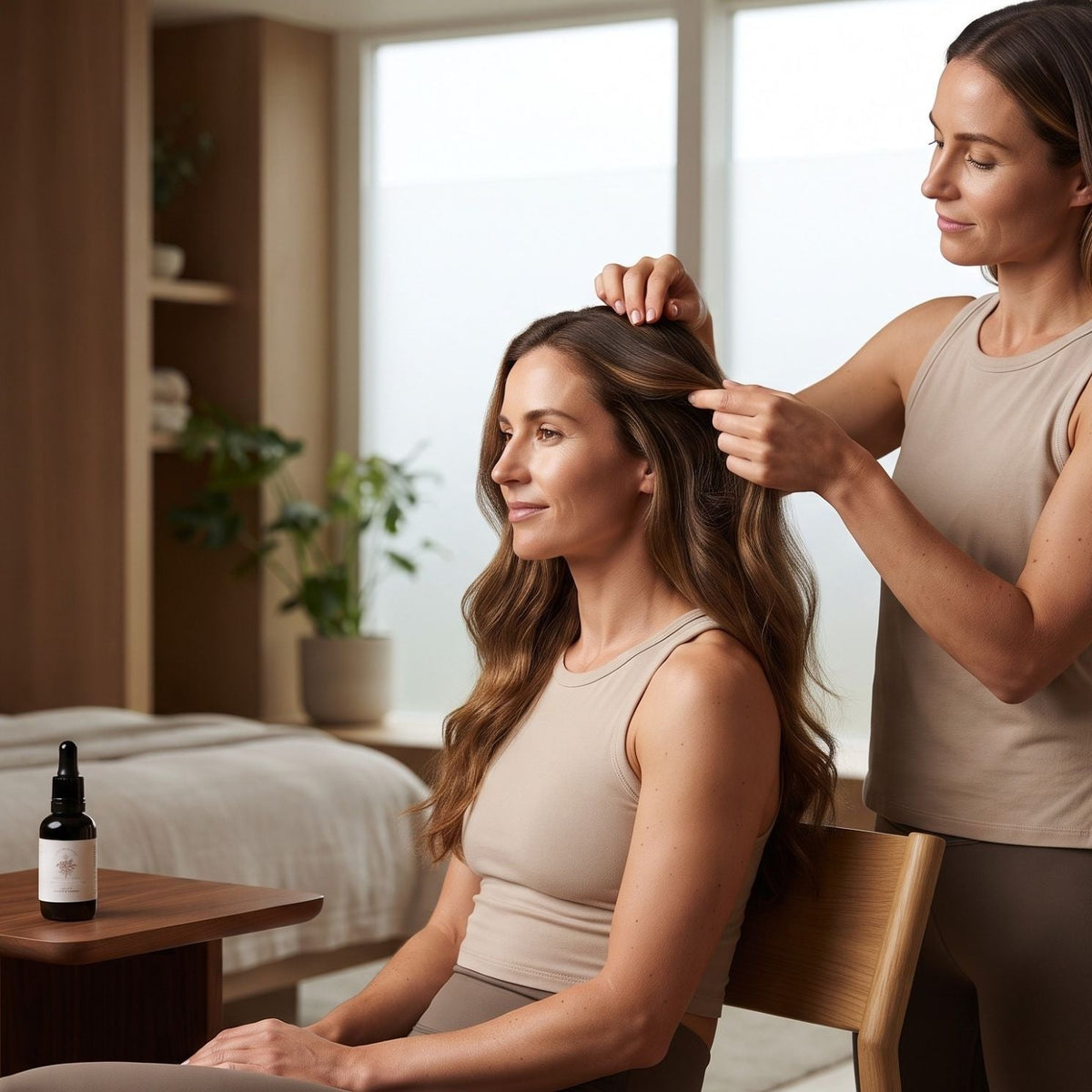
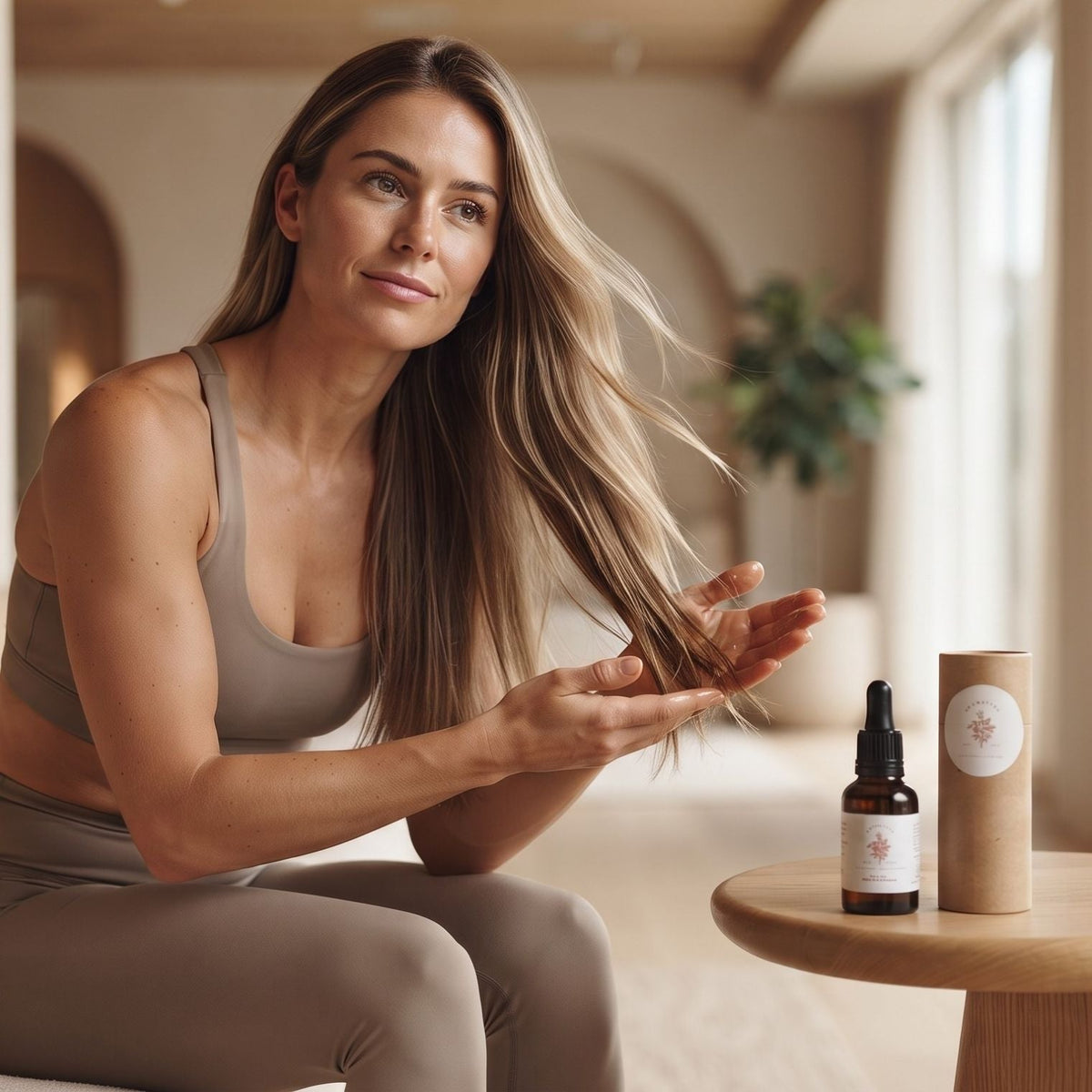
If your hair feels dry, brittle, or lifeless despite trying every serum on the shelf, the problem might not be your hair. It might be what's in the bottle. Genuine organic hair oil UK brands formulate with real botanicals, not a few drops of plant extract diluted in mineral oil and silicone.
This guide walks through what actually makes an oil "organic," which ingredients do real work, and how to build a routine that leaves hair stronger rather than just shinier for a day. It also looks at why the UK's damp winters and hard water in many regions make a genuinely nourishing oil more useful here than in drier climates.
What Is Organic Hair Oil?

Organic hair oil is a haircare product made from plant-derived oils grown and processed without synthetic pesticides, artificial fragrances, or chemical solvents. Genuine formulas rely on cold-pressed or steam-distilled extraction, which preserves the fatty acids, vitamins, and antioxidants naturally found in the plant.
This matters because heat and chemical extraction can strip out the very compounds that make an oil effective in the first place. A properly made natural hair oil UK buyers can rely on should list recognisable botanical ingredients near the top, not synthetic derivatives with long chemical names.
"Natural" and "organic" aren't quite the same, even though people often use them interchangeably. A natural oil simply comes from a plant rather than a lab, while an organic oil goes further, grown without synthetic fertilisers or pesticides and extracted without harsh solvents. This extra assurance matters in the UK especially, where hard water in areas like London and the South East leaves mineral deposits that roughen the hair shaft over time. A nourishing plant oil helps counteract this by smoothing the cuticle, which is why oiling has become a routine step rather than an occasional treatment.
Why Is Chemical-Free Hair Oil Better for Your Hair?
Conventional hair oils often contain mineral oil, silicones, and synthetic fragrance compounds. These sit on the hair shaft and create shine, but they don't nourish the scalp or strengthen the strand from within.
A chemical-free hair oil works differently. It penetrates the hair cuticle, delivers fatty acids and antioxidants directly to the follicle, and supports the scalp's natural barrier function.
There are three practical reasons this matters:
-
Fewer irritants: Synthetic fragrances and preservatives are among the most common triggers for scalp sensitivity and contact dermatitis.
-
Better long-term results: Nutrient-rich oils such as castor, jojoba, and argan support keratin production, which is the protein hair is largely made of.
-
No buildup: Silicone-based products can accumulate on the scalp over time, gradually weighing hair down and blocking follicles.
There's also a seasonal angle worth considering. UK winters combine central heating indoors with cold, damp air outdoors, and that swing strips moisture from both skin and hair. A chemical-free hair oil applied consistently through autumn and winter helps offset that moisture loss in a way that a rinse-out conditioner alone usually can't manage.
How Do You Identify Genuine Organic Hair Oil UK Products?
Not every product labelled "natural" earns the name. UK regulations don't currently restrict the word "organic" on cosmetics the way they do for food, so the label alone isn't proof of anything.
Here's what to check before buying:
-
Certification marks: Look for Soil Association or COSMOS Organic certification, which verifies ingredient sourcing and processing standards.
-
Ingredient order: Ingredients are listed by concentration. A quality oil should show botanical oils in the first few positions, not water or synthetic thickeners.
-
Absence of parabens and sulphates: These preservatives and detergents are common in mass-market formulas but unnecessary in a well-made natural blend.
-
Batch transparency: Brands that disclose sourcing, extraction method, and batch size tend to have less to hide.
-
Cruelty-free and vegan status: These labels usually correlate with more careful, ethical formulation overall.
It's also worth checking whether a brand discloses where its raw ingredients are sourced from, since climate and soil quality directly affect the potency of botanical oils. A jojoba oil grown in nutrient-poor soil and rushed through processing will simply contain fewer active compounds than one grown and extracted with care, even if both carry similar labelling. Reputable UK apothecaries tend to be upfront about this because it's part of what justifies the price difference from supermarket alternatives.
Which Ingredients Make the Best Organic Hair Oil?
The best organic hair oil formulas tend to combine a few well-researched botanicals rather than a long list of filler ingredients. Each oil brings a distinct benefit, so understanding what each one does helps you choose based on your actual hair concern.
-
Castor oil: Rich in ricinoleic acid, it improves blood circulation to the scalp and is widely used to support hair density.
-
Jojoba oil: Structurally similar to human sebum, it balances oil production without clogging follicles.
-
Argan oil: High in vitamin E and essential fatty acids, it smooths the cuticle and reduces frizz.
-
Rosemary oil: Studies have compared its effects on hair growth to minoxidil in small trials, though more research is needed.
-
Coconut oil: One of the few oils shown to reduce protein loss from the hair shaft during washing, thanks to its low molecular weight.
-
Peppermint oil: Often used alongside castor or rosemary in small concentrations, it produces a cooling sensation on the scalp and is thought to support circulation similarly.
-
Hemp seed oil: Lightweight and rich in omega fatty acids, it suits fine or oily hair types that struggle with heavier oils like castor.
A well-blended plant-based hair oil UK formulation usually pairs a carrier oil, such as jojoba or argan, with a smaller concentration of an active oil like castor or rosemary for targeted benefit. The ratio matters more than most people realise. Too much active oil and the blend can irritate a sensitive scalp; too little and it becomes little more than a shine treatment with no functional benefit.
How Should You Use Natural Hair Oil UK Formulas for Best Results?
Application matters as much as ingredient quality. Using too much oil, or applying it incorrectly, can leave hair greasy rather than nourished.
A simple, effective routine looks like this:
-
Section dry or damp hair and apply a few drops directly to the scalp.
-
Massage gently for two to three minutes to stimulate circulation.
-
Work any remaining oil through the mid-lengths and ends, where hair is oldest and most prone to breakage.
-
Leave it on for at least thirty minutes, or overnight for deeper conditioning.
-
Wash out thoroughly with a sulphate-free shampoo.
Two to three applications a week is generally enough. Daily use can lead to product buildup, particularly with heavier oils like castor.
Hair type also changes how oil should be applied. Fine or oily hair generally does better with scalp-only application, since adding oil to the lengths can weigh it down quickly. Thicker, curlier, or chemically treated hair usually benefits from more generous application through the mid-lengths and ends, where dryness tends to be most pronounced. Adjusting the amount to your specific hair type, rather than following a fixed routine, tends to produce better results over a few weeks of consistent use.
When Should You Choose Hair Growth Oil Over a Standard Treatment?

Standard hair oils focus on shine, softness, and reducing breakage. A dedicated hair growth oil is formulated differently, with a higher concentration of circulation-boosting and follicle-supporting ingredients like castor, rosemary, and peppermint.
If your main concern is thinning, slow growth, or a receding hairline, a growth-focused blend applied directly to the scalp will generally outperform a general-purpose finishing oil. If your hair is simply dry or frizzy, a lighter conditioning oil is usually the better fit.
Why Choose Arc Native for Organic and Plant-Based Hair Care?
Arc Native is a UK-based wellness and self-care apothecary built around a simple idea: skincare and haircare should be handcrafted, honest, and genuinely effective, not diluted for mass production.
Every product in the Personal Care Collection, including the hair growth oil, is made in small batches using organic, vegan, and cruelty-free ingredients. Nothing is outsourced to large-scale manufacturing, which means each batch gets the same attention to sourcing and formulation from start to finish.
This same philosophy runs through the wider range. The Recovery Collection uses high-potency magnesium balms and magnesium recovery oils to support muscle and joint relief after training, while the Mental Wellness Collection offers aromatherapy blends designed to support focus, energy, and emotional balance. Alongside the haircare line, the Personal Care Collection also includes botanical bath bombs and nourishing skincare oils, all built on the same commitment to sustainable, ethical production.
For anyone looking to move away from synthetic, mass-produced formulas and towards premium, holistic self-care, Arc Native offers a straightforward place to start. Explore the collection and see the difference a genuinely handcrafted formula makes.
Conclusion: Making the Switch to Organic Hair Oil UK
Choosing an organic hair oil UK brand you can trust comes down to reading labels carefully, understanding what each ingredient actually does, and being realistic about how often to apply it. The right formula won't just add shine; it will genuinely support the scalp and hair shaft over time.
Whether you're dealing with dryness, breakage, or slower growth, the best plant-based hair oil UK shelves have to offer, built from a small number of well-chosen botanicals, will almost always outperform a synthetic-heavy product with a longer ingredient list. Small, consistent changes to your routine tend to matter more than any single "miracle" product. .
FAQ’s
-
Is organic hair oil actually better than regular hair oil?
Yes, in most cases. Organic hair oils are extracted without harsh solvents and typically contain higher concentrations of active fatty acids and antioxidants, since they're not diluted with mineral oil or silicone fillers.
-
How often should I apply natural hair oil for best results?
Two to three times a week is generally ideal for most hair types. Daily use can lead to buildup, particularly with thicker oils like castor or coconut.
-
Can organic hair oil help with hair thinning?
Certain oils, particularly castor and rosemary, support scalp circulation and follicle health, which can help with thinning when used consistently over several months. Results vary by individual and underlying cause.
-
What ingredients should I avoid in a hair oil?
Avoid mineral oil, synthetic fragrance, parabens, and silicones if you're looking for a genuinely natural formula. These ingredients coat the hair rather than nourishing it.
-
Is organic hair oil suitable for all hair types?
Most organic oils suit a wide range of hair types, though lighter oils like jojoba work better for fine hair, while richer oils like castor or coconut suit thicker, coarser hair textures.