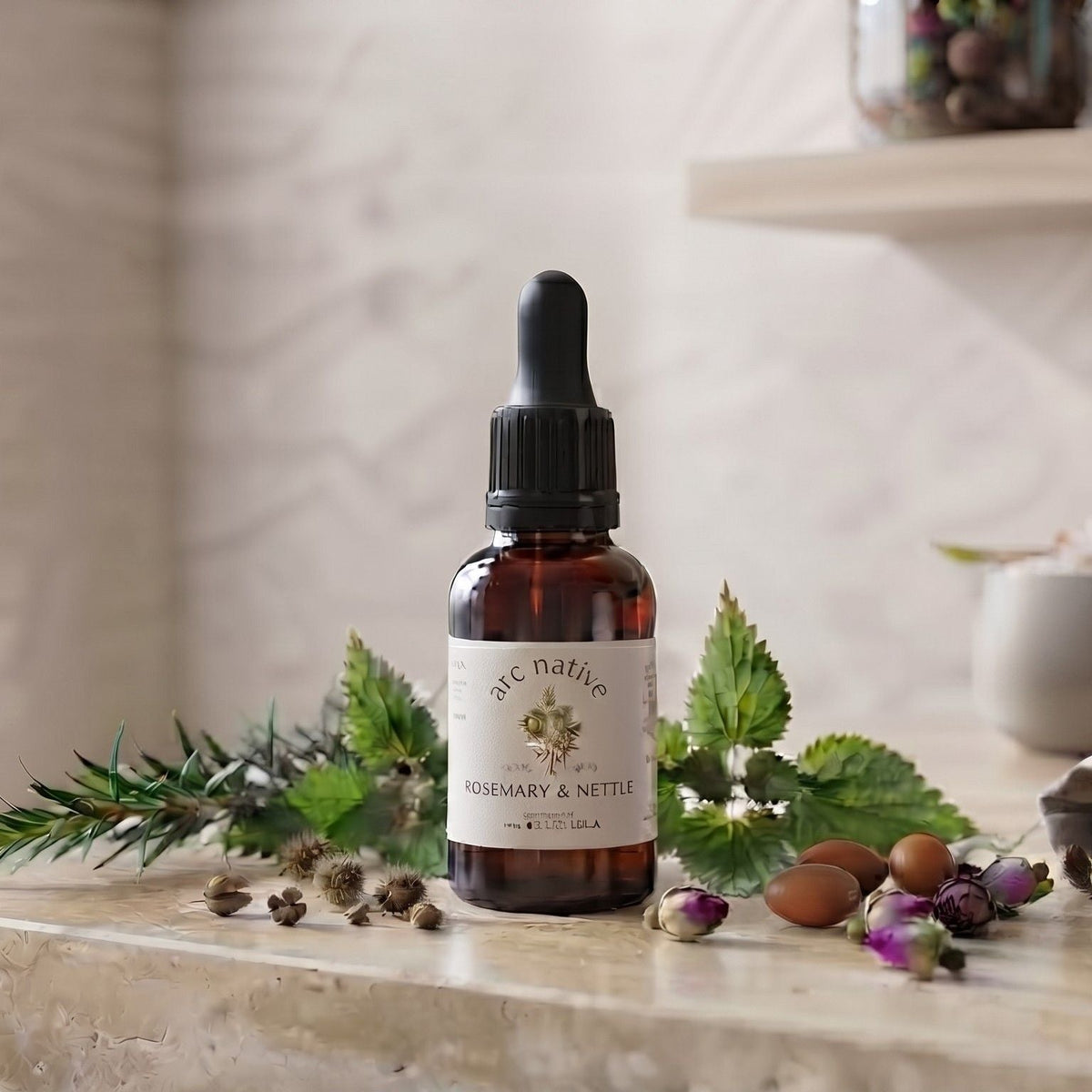
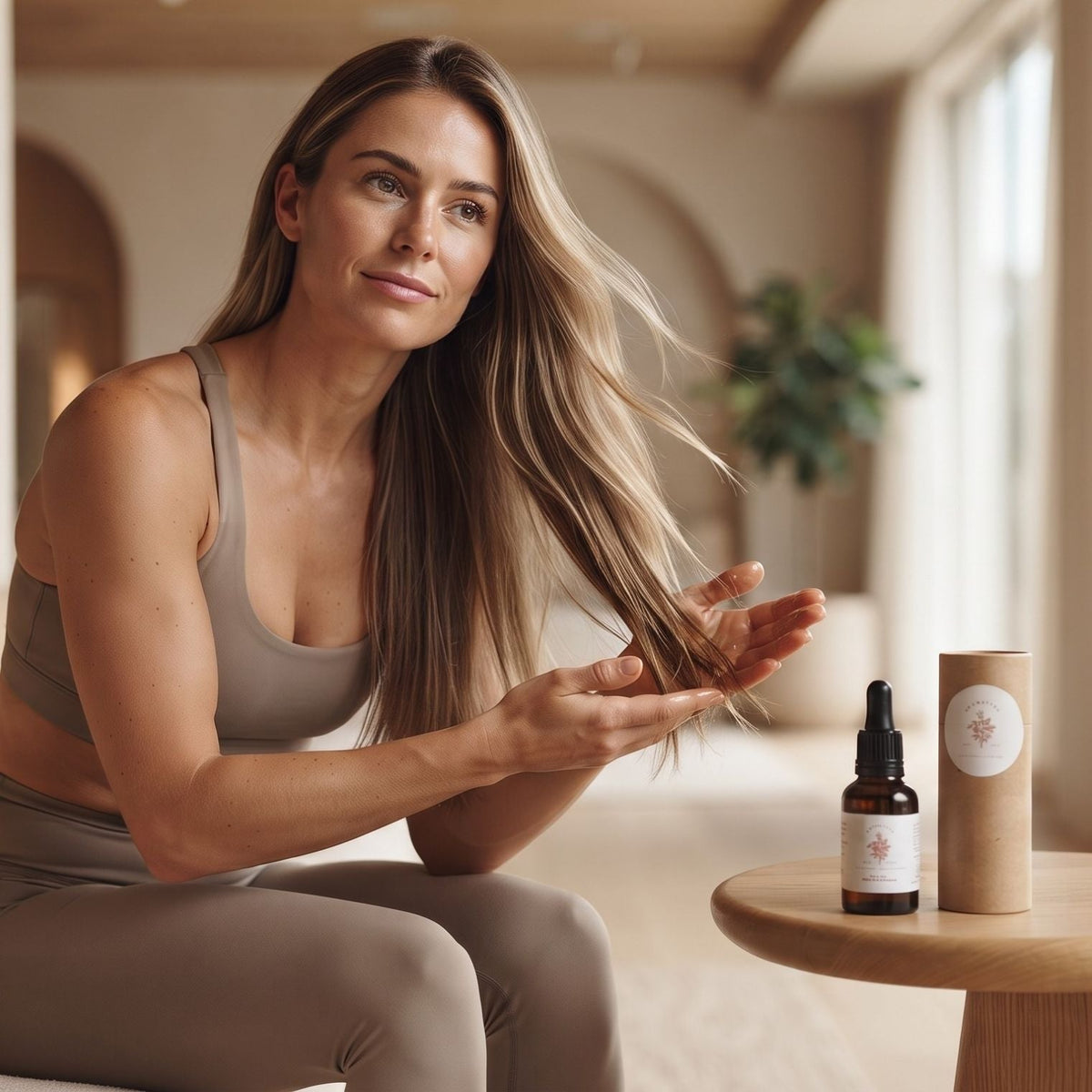
If your hair snaps when you brush it, frizzes the moment it's humid, or just looks tired no matter what you do, the fix usually isn't another shampoo. The right nourishing hair oil for damaged hair works at a different level. It gets into the strand itself, not just the surface, and that's what separates real repair from a temporary shine.
Most people reach for a new conditioner or a "repair" mask the moment their hair starts feeling rough, but those products work on the surface and wash out within a day or two. Oil behaves differently. It sits in and around the strand long enough to actually change how hair feels and holds up over time, which is exactly why it's become the go-to step for anyone serious about reversing damage rather than just hiding it.
This guide breaks down what actually damages hair, how oil treatments work on a biological level, and how to choose one that delivers results instead of just a nice scent. By the end, you'll understand exactly what to look for on an ingredient label and how to build a routine that fits your hair type.
What Causes Hair Damage in the First Place?
Hair damage isn't one thing. It's usually a mix of mechanical, chemical, and environmental stress that wears down the outer layer of the strand (the cuticle) faster than your body can replace it. Understanding the cause helps you choose the right treatment, since a heat-damaged strand and a chemically processed strand don't respond the same way to every product.
Common causes include:
-
Heat styling: Straighteners and curling irons above 180°C strip moisture and weaken the protein bonds in hair.
-
Chemical processing: Bleach, relaxers, and permanent color break down the cuticle structure.
-
Overwashing or harsh sulfates: Strip natural sebum, leaving hair dry and porous.
-
UV and environmental exposure: Sun and pollution oxidise the hair shaft over time.
-
Mechanical stress: Tight ties, rough towel drying, and brushing wet hair.
Once the cuticle is compromised, hair loses its ability to retain moisture, which leads to the classic signs of damage: dullness, split ends, breakage, and frizz. Left untreated, this cycle tends to worsen with every wash, since porous hair absorbs and loses water faster than healthy hair.
How Does Hair Oil for Damaged Hair Actually Work?

A quality natural hair oil for damaged hair works in two ways. It either penetrates the hair shaft to reinforce it from within, or it coats the cuticle to seal in moisture and reduce friction. The best formulations do both, which is why blended oils tend to outperform single ingredient products.
Oils with a low molecular weight, like coconut and argan oil, can move into the hair cortex and reduce protein loss during washing. Heavier oils, such as castor and jojoba, sit closer to the surface and form a protective barrier that limits moisture loss and shields hair from further mechanical damage.
This is why layering matters. A penetrating oil applied before styling, followed by a sealing oil on the ends, gives damaged hair support from the inside out. Skipping one of these steps is one of the most common reasons people feel like oil "isn't working" for them.
Which Ingredients Make the Best Hair Oil for Damaged Hair?
Not all oils behave the same way on hair, and this is where most people get confused by marketing claims rather than actual chemistry. A long ingredient list doesn't automatically mean a better product, what matters is whether the oils included actually address the type of damage you're dealing with.
Look for a blend that includes:
-
Argan oil, rich in vitamin E and fatty acids, known for improving shine and reducing frizz.
-
Jojoba oil, which closely mimics natural sebum, so it balances the scalp without clogging follicles.
-
Castor oil, thick and occlusive, is ideal for sealing split ends and strengthening brittle strands.
-
Rosemary oil is traditionally used to support scalp circulation and a healthy growth environment.
-
Vitamin E, an antioxidant that helps protect hair from further oxidative stress.
A well-formulated damaged hair treatment with oil typically combines two or three of these rather than relying on a single ingredient, since each one addresses a slightly different part of the damage cycle. Formulas that pair a penetrating oil with a sealing oil generally deliver more consistent results than single ingredient products marketed on one trending ingredient alone.
Why Is Nourishment More Important Than Just Shine?
Plenty of products make hair look glossy for a day without actually improving its condition. That's a cosmetic fix, not a repair. Genuine hair oil for hair nourishment is measured by what happens after several washes, not immediately after application.
Real nourishment shows up as:
-
Reduced breakage when brushing or styling
-
Fewer split ends forming over time
-
Improved elasticity, meaning hair stretches slightly and returns instead of snapping
-
A scalp that feels balanced rather than oily or flaky
If a product only delivers surface shine, the underlying damage is still there. It's just temporarily masked, and once the shine fades, the same brittle texture returns until the strand itself is actually strengthened.
When Should You Apply Hair Oil for Best Results?
Timing changes what the oil can actually do for your hair, and this is one of the most overlooked parts of any oil-based routine.
-
Pre-wash treatment: Apply oil to dry or damp hair 30 minutes to overnight before shampooing. This is the most effective way to reduce protein loss during washing, since the oil coats the strand before water and surfactants can strip it.
-
Post-wash on damp hair: A small amount of oil on towel dried hair seals in moisture and cuts down on frizz as hair air dries or gets styled.
-
On dry ends throughout the day: A few drops on the ends tames flyaways and softens texture without weighing down the roots.
For most people dealing with visible damage, a consistent pre-wash oil treatment two to three times a week produces the most noticeable improvement within four to six weeks. Patience matters here, since hair regains strength gradually as new growth replaces the damaged sections closer to the root.
How Do You Choose the Best Hair Oil for Damaged Hair?

With so many products on the market, it helps to filter by a few practical factors rather than packaging claims.
-
Ingredient transparency: The label should list actual botanical oils, not just "fragrance" and fillers.
-
Formulation purpose: Check whether it's designed for repair, growth, or scalp care, since these overlap but aren't identical.
-
Hair type compatibility: Fine hair usually needs lighter oils like jojoba or grapeseed, while coarse or curly hair tolerates heavier oils like castor.
-
Absence of harsh additives: Avoid products with added sulfates, silicones, or synthetic dyes that can build up over time.
-
Sourcing and production method: Cold-pressed, organic oils generally retain more of their active nutrients than heavily processed alternatives.
This is where a genuinely well made natural hair oil for damaged hair fits naturally into the conversation. The best formulas are built around small batch, organic botanical oils rather than mass produced formulas, which keeps the active compounds in the oil largely intact.
Why Choose Arc Native for Nourishing Hair Oil?
If you're going to invest time into a hair repair routine, it's worth choosing products that are formulated with the same care you're putting into the process itself.
Arc Native is a UK-based wellness and self-care apothecary built around one simple idea: skincare and haircare should be as clean and considered as anything else you put on your body. Every product is handcrafted in small batches, using organic, vegan, and cruelty-free ingredients, so nothing gets diluted for the sake of scale.
Their Personal Care Collection includes nourishing skincare oils and a dedicated hair growth oil formulated with botanical actives, alongside botanical bath bombs designed for genuine wind-down self-care. It sits alongside their Recovery Collection of high-potency magnesium balms and oils for muscle and joint relief, and their Mental Wellness aromatherapy blends for focus, energy, and emotional balance. All of these reflect the same holistic philosophy across the brand.
What makes Arc Native worth considering isn't just the ingredient list; it's the consistency. Sustainable, ethical production and premium sourcing run through every collection, so you're not compromising quality in one area of your routine to get it in another.
If you're ready to give your hair the kind of consistent, botanical first care it needs to actually recover, explore the Personal Care Collection and see what a genuinely handcrafted formula can do for strength, softness, and everyday shine.
Conclusion
Damaged hair doesn't recover overnight, but consistent use of the right nourishing hair oil for damaged hair makes a measurable difference within weeks, not months. The key is choosing a formula with real, penetrating, and sealing oils rather than one built for scent alone.
If you're looking for a natural hair oil for damaged hair that's handcrafted with organic, vegan ingredients, Arc Native's Personal Care Collection is worth exploring as part of a broader self-care routine. Strong, soft hair starts with what you put on it, and consistency does the rest.
FAQ’s
-
Can hair oil really repair damaged hair?
Hair oil can't rebuild hair that has already broken off, but it can significantly reduce further protein loss, improve elasticity, and strengthen the hair shaft over time, which prevents existing damage from getting worse.
-
How often should I use hair oil on damaged hair?
Two to three times a week as a pre-wash treatment is generally enough for noticeable improvement. Daily use on the ends is fine, but daily full scalp application can lead to buildup for some hair types.
-
Is natural hair oil better than silicone-based serums?
Natural oils penetrate the hair shaft and offer genuine nourishment, while silicone-based serums mostly coat the surface for temporary shine. For long term repair, natural oils tend to deliver more lasting results.
-
Can hair oil help with split ends?
Oil can't fuse split ends back together, but sealing oils like castor or argan reduce further splitting by lowering friction and moisture loss, which slows the problem down considerably.
-
What's the difference between hair oil for growth and hair oil for damage repair?
Growth oils typically focus on scalp circulation and follicle health, often featuring ingredients like rosemary. Repair oils focus on the strand itself, using penetrating and sealing oils to restore strength and elasticity.
-
Does hair oil work on all hair types?
Yes, but the formulation matters. Fine hair does better with lightweight oils applied sparingly, while thick or coarse hair can handle richer, heavier oil blends without looking weighed down.