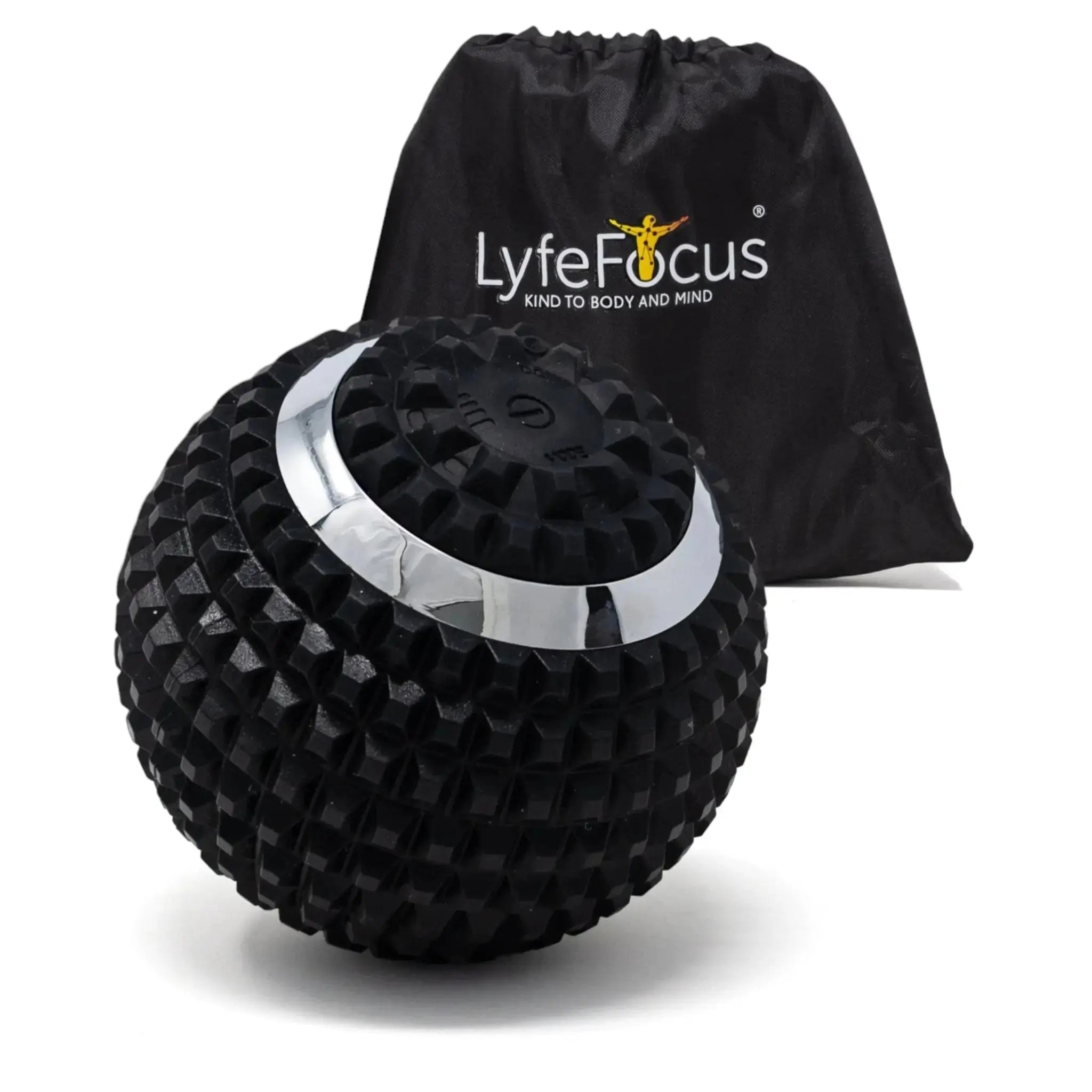
A vibrating massage ball looks simple, but there's real science behind why it feels so good on a tight shoulder or an aching calf. It combines two forces, mechanical pressure and oscillating vibration, to change how your muscles and nervous system respond to tension.
Understanding that science helps you use the tool correctly instead of just rolling it around and hoping for the best. Below, we break down the physics, the physiology, and the practical ways a vibrating massage ball fits into a recovery routine.
What Is a Vibrating Massage Ball?

A vibrating massage ball is a handheld or floor-based recovery tool that combines a rounded, dense surface with an internal motor that produces rapid pulsing vibration. Unlike a static foam roller, it delivers energy into the tissue rather than relying purely on your body weight for pressure.
Most models run on rechargeable batteries and offer multiple vibration intensities, usually ranging from around 1,500 to 3,200 pulses per minute. The ball shape lets it target small, specific areas, like the arch of the foot, the base of the skull, or a knot between the shoulder blades, that flatter tools can't reach as precisely.
This makes a vibrating massage ball for feet or a neck and shoulder massage ball especially useful, since these areas often need concentrated, localized pressure rather than broad coverage.
How Does Vibration Physically Affect Muscle Tissue?
Vibration works through a principle called mechanotransduction, the process by which cells convert mechanical stimulation into biological signals. When the ball's motor oscillates against skin and muscle, it creates rapid, repetitive micro-movements in the underlying tissue.
These micro-movements do a few measurable things. They increase local blood flow by encouraging vasodilation, they stimulate mechanoreceptors in the skin and muscle fascia, and they create a mild stretching-and-releasing cycle within tight muscle fibers.
Research on vibration therapy has shown it can reduce muscle stiffness and improve range of motion within minutes of application. That's a big part of why a back massage ball vibrating against a stiff lower back can produce noticeable relief faster than static pressure alone.
Why Does Vibration Reduce Pain Perception?
The pain-relief effect comes down to a well-documented neurological process called Gate Control Theory. Nerve fibers that carry vibration and touch signals travel faster than the nerve fibers that carry pain signals.
When vibration input reaches the spinal cord first, it partially blocks or "closes the gate" on pain signals trying to pass through to the brain. This is the same reason rubbing a stubbed toe instinctively feels like it helps, since vibration therapy simply applies that principle in a more controlled, sustained way.
This mechanism explains why people reach for a leg massage ball vibrating tool after a hard workout: the vibration doesn't just relax the muscle, it actively dampens the discomfort signal in real time.
How Does a Vibrating Massage Ball Improve Blood Flow?

Circulation matters because blood carries oxygen and nutrients to fatigued muscle while clearing out metabolic byproducts like lactate. Vibration stimulates the smooth muscle lining of blood vessels, prompting them to widen temporarily.
This localized vasodilation increases blood flow to the treated area, which studies on vibration platforms and handheld devices have associated with faster clearance of exercise-induced muscle soreness. Warmer, better-perfused tissue also becomes more pliable, making it easier to work out knots and adhesions.
For athletes, this is one of the clearest practical benefits. A calf massage roller ball used after a run can shorten the window of post-exercise stiffness by supporting circulation while the muscle is still primed from activity.
What Role Does Fascia Play in How Massage Balls Work?
Fascia is the thin, connective tissue web that surrounds and separates every muscle, organ, and bone in your body.
Vibration and pressure combined help release fascial restrictions through a process called thixotropy: the tissue becomes more fluid and pliable when mechanical energy is applied, then gradually stiffens again once the stimulus stops. This is why consistent, repeated use tends to produce better long-term results than a single session.
Because fascia connects across the whole body, working one tight spot with a massage ball can sometimes ease tension you feel elsewhere, which is a detail many people don't expect the first time they try one.
Which Frequencies and Intensities Work Best for Different Muscle Groups?
Not every muscle group responds the same way to vibration, and matching intensity to tissue type makes a real difference.
-
Small, sensitive areas (feet, hands, neck): lower frequency settings around 1,500–2,000 PPM tend to feel more comfortable and are less likely to overstimulate nerve-dense regions.
-
Large muscle groups (back, glutes, thighs): higher frequency settings, often 2,500 PPM and above, penetrate deeper tissue more effectively.
-
Post-workout calves and shins: a moderate-to-high setting combined with slow, deliberate rolling helps address both fascia and muscle fiber tension.
A vibrating massage ball for feet is a good example of where lower intensity usually wins. The soles of the feet are packed with nerve endings, so a gentler setting delivers relief without becoming irritating.
How Should You Use a Vibrating Massage Ball for Best Results?

Technique matters as much as the tool itself. Start at a low intensity and gradually increase it as your tissue warms up and tolerates more pressure.
Move the ball slowly across the target area rather than pressing it into one spot for too long. Thirty to 60 seconds per area is generally enough to notice a difference. Breathing steadily while you work through tight spots also helps the nervous system relax, which allows muscle fibers to release more effectively.
Using it before activity can help prime muscles and improve mobility, while using it afterward supports recovery and reduces next-day soreness. Many people also find it useful in the evening, pairing it with a warm compress or a magnesium-based recovery balm to further calm overworked muscles.
Are Vibrating Massage Balls Safe for Everyone?
For most healthy adults, vibrating massage balls are safe when used correctly and in moderation. However, certain groups should be cautious or consult a healthcare provider first.
This includes people with deep vein thrombosis, severe osteoporosis, active injuries, skin conditions in the treatment area, or those who are pregnant. Vibration should also be avoided directly over varicose veins, recent surgical sites, or areas with numbness or reduced sensation.
If you experience sharp pain, bruising, or worsening symptoms during use, stop immediately. A massage ball is meant to complement recovery, not push through injury.
How Do Vibrating Massage Balls Compare to Foam Rollers and Manual Massage?
Each tool has a distinct advantage depending on what you need.
Foam rollers cover large muscle groups efficiently and rely on body weight for pressure, but they can't isolate small trigger points the way a ball can. Manual massage from a therapist offers skilled, adaptive pressure and diagnostic insight, but it's not always accessible or affordable on a weekly basis.
A vibrating massage ball sits in between: it's more targeted than a roller and more consistent and repeatable than self-massage with hands alone, while adding the neurological and circulatory benefits that only vibration provides. Many people use all three depending on the day and the muscle group involved.
Choosing Natural Recovery Support for Everyday Wellness
A vibrating massage ball works best as part of a broader recovery routine, not as a standalone fix. Pairing mechanical tools with high-quality, natural ingredients gives muscles what they need to actually repair and reset.
Arc Native was built around that idea. As a UK-based wellness and self-care apothecary, Arc Native creates handcrafted, small-batch products designed to support the body honestly, without synthetic fillers or shortcuts.
Their recovery balms and magnesium oils use a high-potency magnesium formula that supports muscle and joint recovery, and every batch is organic, vegan, and cruelty-free. Applying one after using a massage ball can help extend that sense of release, especially on days when muscles feel particularly overworked.
Beyond physical recovery, Arc Native's aromatherapy and mental wellness blends are crafted with natural botanical ingredients to support focus, energy, and mental clarity, useful for the mental fatigue that often accompanies physical tension. Their botanical personal care range, including bath bombs, skincare oils, and hair growth oil, rounds out a self-care routine built on sustainable, artisan-made formulations rather than mass-produced convenience.
For anyone building a genuinely holistic recovery practice, exploring Arc Native's wellness collection is a natural next step.
Conclusion
A vibrating massage ball isn't just a trendy gadget. It works through real, well-documented physiological mechanisms, from mechanotransduction and gate control pain theory to improved circulation and fascial release. Whether you're using a neck and shoulder massage ball after a long day at a desk or a calf massage roller ball post-run, the science behind vibration therapy explains why it consistently delivers noticeable relief.
Used thoughtfully, and paired with supportive natural products, a vibrating massage ball can become a genuinely effective part of long-term muscle recovery and everyday wellness.
Frequently Asked Questions
What does a vibrating massage ball actually do to muscles?
It combines pressure and rapid vibration to increase blood flow, stimulate mechanoreceptors, and reduce pain signals through gate control theory, helping tight or fatigued muscles release faster than static pressure alone.
How long should you use a vibrating massage ball per session?
Most sessions work well at 30 to 60 seconds per muscle group, with total use of 5 to 15 minutes depending on how many areas you're targeting.
Can a vibrating massage ball help with plantar fasciitis?
A vibrating massage ball for feet can help ease tightness in the plantar fascia and surrounding muscles, but it should be used gently and shouldn't replace medical treatment for diagnosed plantar fasciitis.
Is it better to use a vibrating massage ball before or after exercise?
Using it before activity can improve mobility and blood flow, while using it after exercise supports recovery and helps reduce next-day soreness. Both timings offer distinct benefits.
Do vibrating massage balls work on fascia or just muscle?
They work on both. Vibration and pressure help fascia become more pliable through a process called thixotropy, while also directly relaxing muscle fibers beneath it.
Are vibrating massage balls safe to use every day?
For most healthy adults, daily use in short sessions is generally safe. Those with circulatory conditions, recent injuries, or certain medical concerns should check with a healthcare provider first.
What's the difference between a massage ball and a foam roller?
A massage ball targets small, specific areas with more precision, while a foam roller covers larger muscle groups more broadly. Many people use both depending on the muscle being treated.
Can a back massage ball vibrating tool help with lower back tension?
Yes, a back massage ball vibrating tool can help relax tight muscles around the lower back by improving local blood flow and reducing muscle guarding, though it should be used cautiously and never directly on the spine.
Does vibration intensity matter for results?
Yes. Lower intensities work better for sensitive areas like the feet and neck, while higher intensities are more effective for larger muscle groups like the back and thighs.
Can massage balls replace professional physical therapy?
No. They're a helpful self-care and recovery tool, but they don't replace diagnosis or treatment from a licensed physical therapist or medical professional for ongoing pain or injury.